Industry Talks & Events
NVIDIA Studio Nights 6.
Real-time visualization for film, faster production feedback, and the public debut of the Chaos Vantage Hydra Delegate.
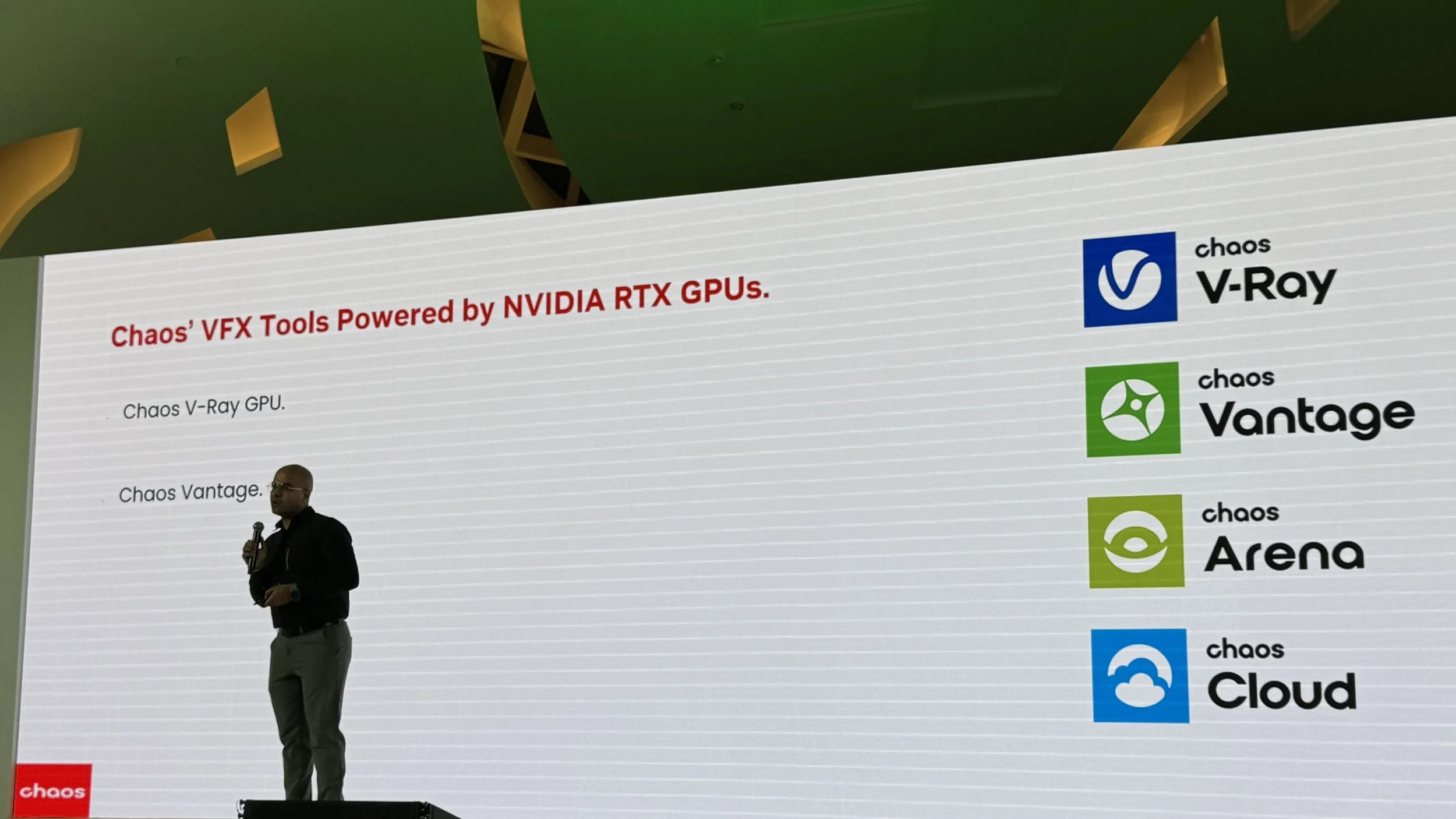
At NVIDIA Studio Nights 6, I spoke about the growing importance of real-time visualization and faster feedback loops in film production. The session publicly introduced the Chaos Vantage Hydra Delegate, Chaos’s real-time solution for film workflows built around NVIDIA RTX GPUs and DLSS, and also highlighted recent advancements in V-Ray for Solaris.
To ground the workflow discussion in production reality, I used two case studies: Goodbye Kansas’s Cyberpunk 2077: Phantom Liberty trailer and a behind-the-scenes VFX breakdown of Stranger Things Season 4.
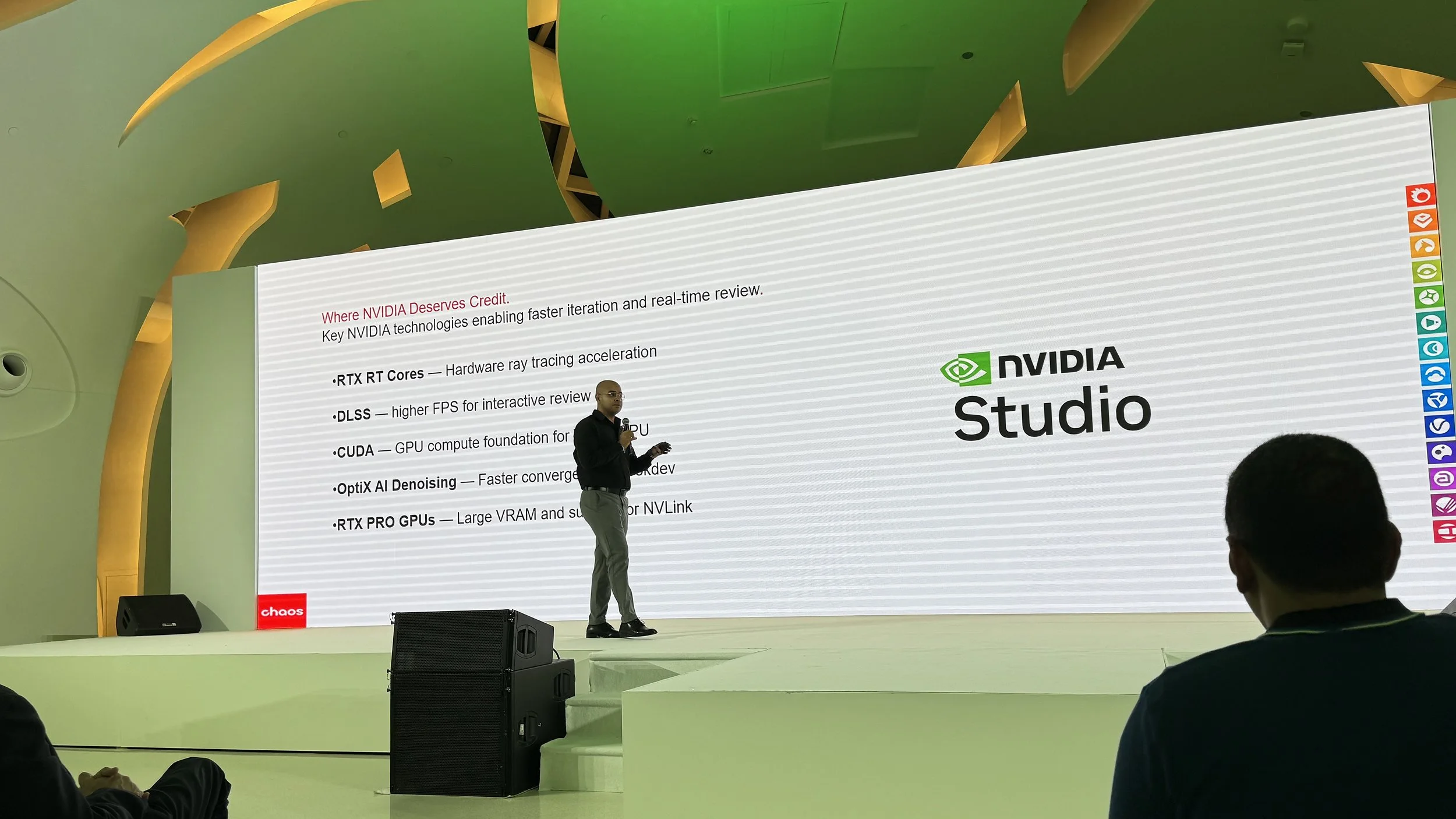
Faster feedback inside production context
The talk focused on a simple point: in many production environments, the delay is not final image quality itself, but the time between making a change and being able to evaluate it.
Real-time review, GPU acceleration, and USD-based workflows can shorten that loop, helping artists and teams review changes sooner and make decisions with less waiting.
Public Debut
Chaos Vantage Hydra Delegate
Technology Focus
NVIDIA RTX, DLSS, OpenUSD / Solaris and real-time rendering
Case Studies
Cyberpunk 2077: Phantom Liberty and Stranger Things Season 4
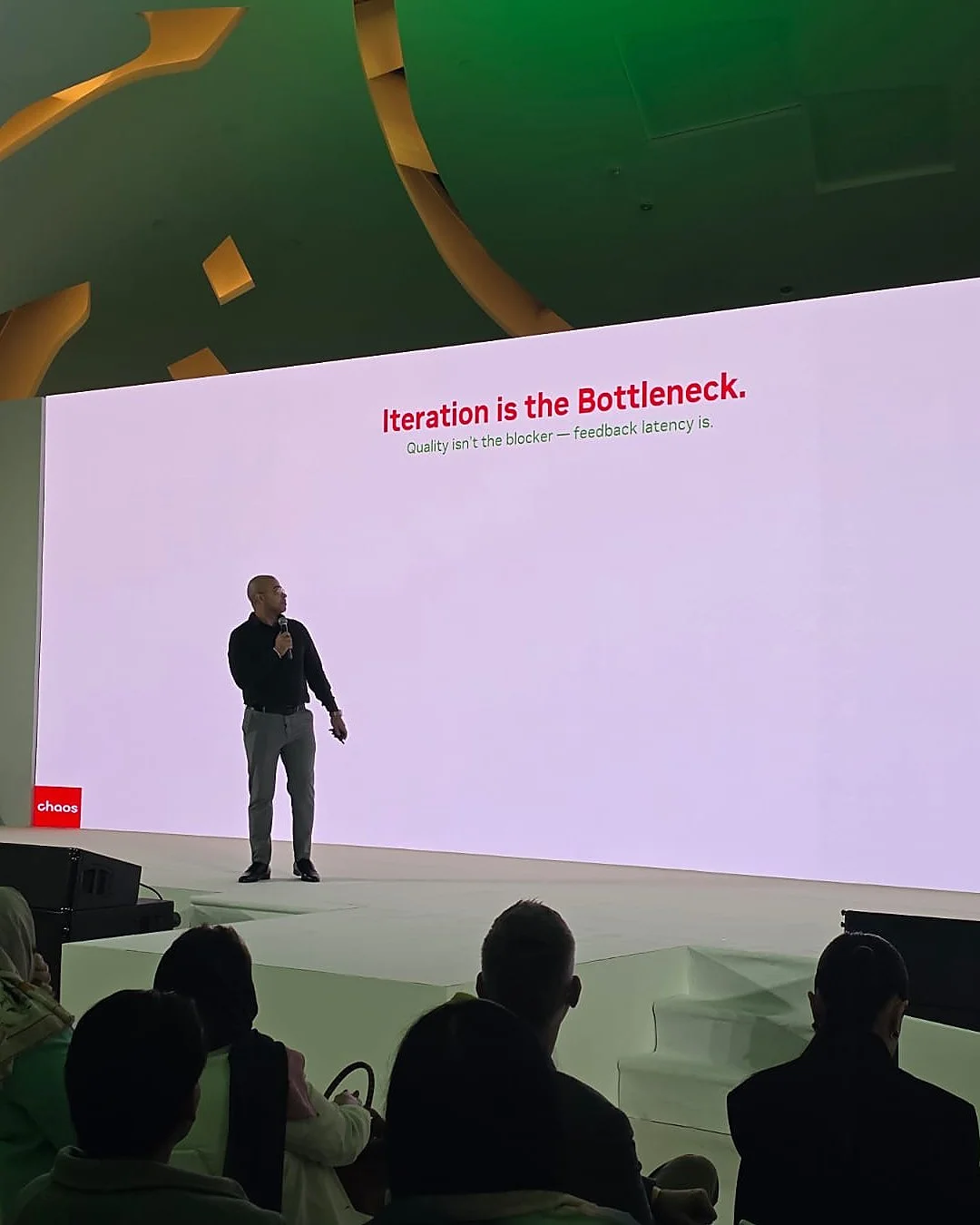
Real-time rendering connected to production workflows
Chaos Vantage Hydra Delegate
A central part of the session was the public debut of the Chaos Vantage Hydra Delegate. I presented it as a real-time visualization path for film workflows, combining Hydra-based integration with GPU-accelerated rendering and DLSS.
V-Ray for Solaris
I also covered progress in V-Ray for Solaris and the broader move toward connected USD-based production workflows, where lighting, rendering, look development and review can operate in a more unified context.
GPU-Accelerated Review
The workflow story centered on shortening the distance between an artist making a change and being able to evaluate the result, particularly during iterative production and review.
Why It Matters
The presentation was not only a technology showcase. It was about practical workflow design: reducing feedback latency, improving review, and keeping artists closer to production context while decisions are being made.
Production examples behind the workflow story
Goodbye Kansas
Cyberpunk 2077: Phantom Liberty
The first example looked at Goodbye Kansas’s trailer work for Cyberpunk 2077: Phantom Liberty. It grounded the discussion in demanding cinematic production and supported the broader point around visual ambition, review, and iteration.
VFX Production
Stranger Things Season 4
The second case study used behind-the-scenes material from Stranger Things Season 4 to connect the workflow discussion to a recognizable production example and the realities of VFX review and decision-making.
Preparing production material for the stage

One of the more difficult parts of preparing the session had nothing to do with presentation design. It was securing approval to show production material related to the Stranger Things Season 4 case study.
That process took time and was completed very close to the event. The studio PR team and colleagues on the Chaos account side helped move the approval forward, allowing the production example to remain part of the final talk.
More talks & presentations
Explore SIGGRAPH, FMX, NVIDIA Studio Nights and other public presentations covering rendering, OpenUSD, real-time visualization and production workflows.